Iran says Strait of Hormuz talks with Oman constructive, unrelated to US
| 07/December/2025 | 12:13
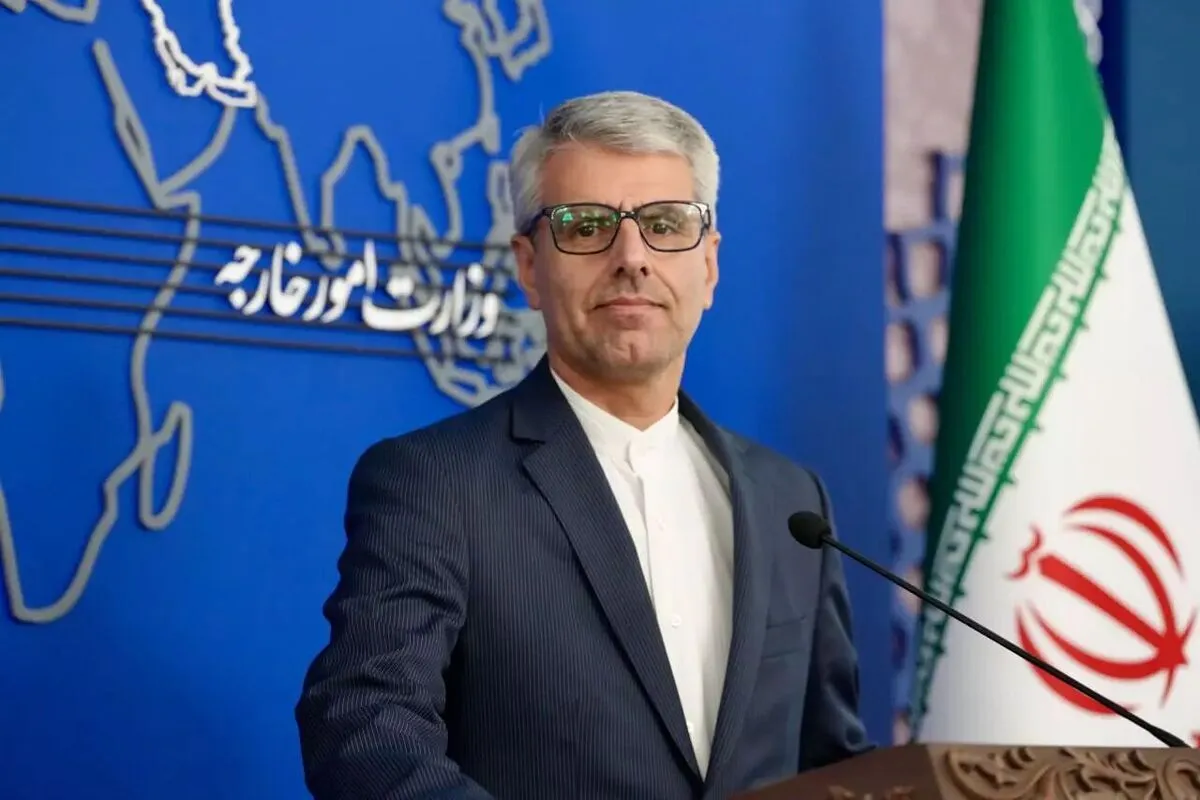
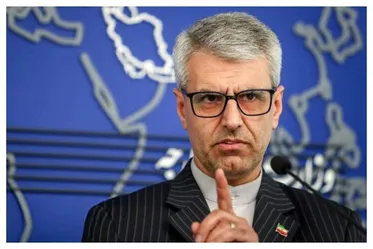
During his weekly press briefing, Foreign Ministry spokesman Esmaeil Baghaei reviewed recent developments concerning Iran and the broader region.
"Our official communication channel with the United States is the US Interests Section in Tehran, for which the Swiss embassy serves as the protecting power. Conversely, the Iranian Interests Section in Washington is considered our official channel in the US," Baghaei said.
"It is common and natural for other countries or officials, either inside or outside the region, to convey messages. However, the claim that a special or direct channel exists between Iran and the United States is incorrect, and no such channel is in place."
The spokesperson of Iran's Ministry of Foreign Affairs also commented on the publication of the new US National Security document, saying, “Naturally, we will examine this document. At first glance, it is very candid and openly states everything the US administrations have pursued over the past years. All their concerns in West Asia revolve around access to energy resources and securing Israel."
"From the essence of this document, we can assess that the US positions itself as a judge in the affairs of countries worldwide—a role that no party accepts. This document, more than being a US National Security document, is essentially a security document for the Israeli regime. This, in itself, indicates US complicity in the regime’s crimes," Baghaei underlined.
He stressed that the document’s emphasis on being proud of the attack on Iran’s nuclear facilities clearly demonstrates that the US accepts international responsibility for this assault.
Commenting on the recent claims raised in the lastest statment of the Persian Gulf Cooperation Council (PGCC) regarding Iran’s three islands, he stated, “Our position on the islands is clear. Historically and legally, there is absolutely no doubt about Iran’s sovereignty over them.”
He added that the recent statement merely repeats assertions that have long appeared in various declarations by the UAE and the Persian Gulf Cooperation Council, stressing, “These are the same baseless claims as before, and we categorically reject them.”
He advised the Persian Gulf littoral states to act responsibly in their statements so as not to “play into the hands of the enemy, namely the Zionist regime.”
Iran, he said, remains committed to maintaining good relations and the principles of good neighborliness with regional countries.
Regarding the question on the existance of a mediator between Iran and the International Atomic Energy Agency (IAEA), he clarified, “We are in direct contact with the Agency."
"As a member of the NPT, our communications with the IAEA take place through our permanent mission in Vienna,” he said.
Baghaei noted that it is not unusual for other parties to discuss the issue with the Agency in separate talks, adding, “But to say that there is a mediator involved is incorrect.”
Addressing Tom Barrack’s allegations against Iran, he stated, “The US administrations have always sought to interfere in Iran’s internal affairs. What they call regime change is, in itself, an admission of the US attempting to violate the sovereignty of a nation. The US has a long history of interference in Iran, and any talk of negotiation is nothing but dictation. The United States needs to change its approach, although we know that changing habits is difficult, if not impossible.”/mehr