Iran Must Get Stronger amid Global Unilateralism: Spokesman
| 30/June/2026 | 20:17
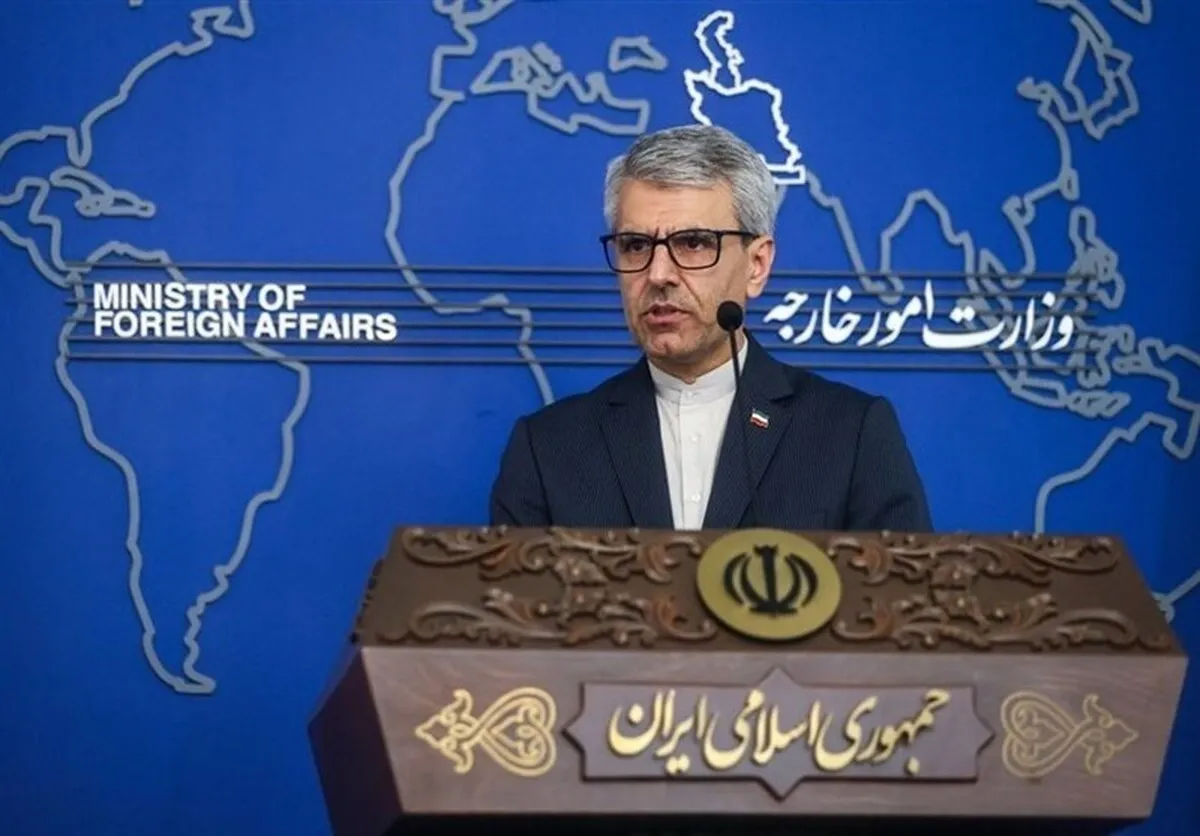
In comments at a weekly press conference on Tuesday, Esmaeil Baqaei said the implementation of the Islamabad memorandum of understanding between Iran and the United States was expected to face challenges, stressing that the diplomatic process began after two wars and in an atmosphere of deep mistrust shaped by Washington’s previous breaches of commitments and obstruction by the Israeli regime.
Baqaei emphasized that the guiding principle of the memorandum is reciprocal implementation of obligations.
“It is clear to everyone that commitment in exchange for commitment means we will fulfill our obligations only as long as the other side does the same,” he stated.
The spokesman added that the text of the memorandum had been drafted with precision and explicitly stipulates that the cessation of war must be observed across all fronts, including Lebanon.
He noted that Iran would continuously monitor developments and employ its own mechanisms to safeguard national interests.
Baqaei further stated that decisions related to Iran’s diplomatic responsibilities are made through an established national process that has evolved over decades, adding that all branches and institutions of the system are involved in decisions concerning war, peace, and negotiations that are fundamental to the country’s present and future.
Commenting on US attacks on Iranian territory, the spokesman warned that Washington’s failure to abide by its commitments would inevitably have negative consequences for the continuation of the diplomatic track.
“We will not leave any action unanswered. Any action against Iran will face an immediate and decisive response,” he said.
Baqaei described those attacks as a violation of Article 1 of the memorandum of understanding and warned that continued violations would create obstacles for continuation of the process.
Referring to Article 13 of the memorandum, he said discussions on a final agreement depend on implementation of several provisions.
“Regarding some clauses, the situation is relatively satisfactory, including ending the naval blockade and issuing the exemption related to oil sales. But in some areas we are facing serious challenges, and in this regard the other side needs to implement its commitments,” he said./tasnim