IRGC Navy targets, stops three violating oil tankers
| 05/July/2026 | 18:49
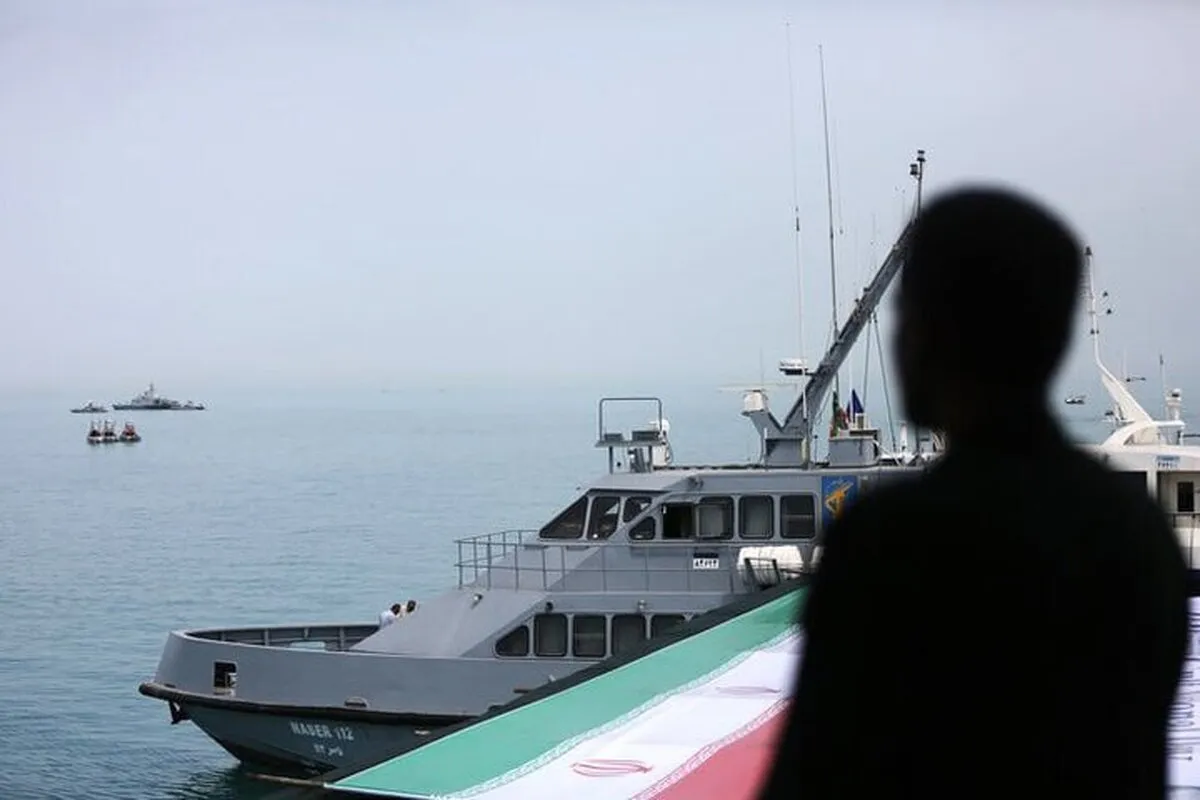
The Forty-Day War was not merely a military confrontation between Iran and its enemies; it is considered a turning point in altering the geometry of power in the Persian Gulf and redefining the concept of deterrence in West Asia. If in past decades, the Strait of Hormuz was primarily known as a vital energy artery, now this waterway has become one of the most important components of Iran's geopolitical power—a component that has cast its shadow not only over regional security but also over the global economy and the calculations of great powers.
For years, America's strategy was predicated on the assumption that its military superiority guaranteed the security of the energy flow in the Persian Gulf. The U.S. Fifth Fleet in Bahrain, numerous military bases in Arab countries, and the continuous presence of Western forces were all established based on this notion: that Washington is the guarantor of maritime security and can contain any disruption.
However, the recent war challenged this assumption. For the first time, the reality became evident that operational control over the Strait of Hormuz does not depend solely on the number of vessels and defense systems, but rather on the geopolitical position, deterrence capability, and political will of the actor that dominates the northern coast of this strategic passage—namely, the Islamic Republic of Iran.
The remarks of Michael Ratney, the former U.S. ambassador to Saudi Arabia, reflect this very transformation. He acknowledged the the moment Iran closed the Strait of Hormuz, the entire psychology of the Persian Gulf changed. This statement is not merely a description of a military action; rather, it signifies the collapse of a long-standing notion regarding the region's security order.
In strategic context, sometimes what changes the equations is not the firing of a missile or the sinking of a vessel, but rather the shift in the mindset of the actors. When governments, financial markets, insurance companies, investors, and energy importers reach the conclusion that the security of the Persian Gulf is not possible without considering Iran's role, the balance of power has in fact shifted—even if no geographical borders have been moved.
From this perspective, Ratney's characterization of the Strait of Hormuz as a "Sword of Damocles" takes on particular significance. This sword is not suspended solely over the heads of Arab countries; rather, it looms over the global economy. A considerable portion of the world's trade in oil, liquefied gas, and strategic goods still passes through this route, and any disruption in it affects the global supply chain, the energy market, maritime insurance, and international transportation.
This very issue has caused the Strait of Hormuz to transform from a geographic chokepoint into a political variable in the decision-making of global powers. Today, any decision concerning Iran is inevitably accompanied by the question of what its consequence for the world's energy security will be.
Within this same framework, The New York Times report on the initial document of the agreement between Iran and the United States is also significant. According to this report, what draws attention more than anything else is not merely the reference to Iran's role in managing the Strait of Hormuz, but rather the acceptance of this reality: that any sustainable mechanism for the administration of this waterway cannot be realized without Tehran's participation and consent. Such a perception indicates that even at the level of negotiations, Iran's role is no longer just a security issue, but has become a part of the future architecture of the region's maritime security.
This development has extensive geopolitical implications. Over the past decades, the Arab countries of the southern Persian Gulf sought to define the regional balance without considering Iran, relying on the American security umbrella. The recent war demonstrated that this model faces serious limitations. Even the most advanced defense systems are incapable of reducing the costs stemming from insecurity in the Strait of Hormuz to zero.
Consequently, the concept of deterrence has also undergone transformation. Deterrence is no longer merely the ability to mount a military response; rather, the capacity to impose economic, psychological, and strategic costs on the opposing side has become equally important. Iran demonstrated that without needing to occupy territory or engage in a large-scale conflict, it can influence the world's economic equations. This is the very power that in new theories of international relations is referred to as "geoeconomic deterrence", that is, utilizing geographical position and economic capacities to increase the cost of hostile decisions.
From this perspective, perhaps Iran's most important achievement in the recent war lies not on the battlefield, but in changing the mental calculations of its rivals. Now, any decision-maker in Washington, London, or Tel Aviv is inevitably compelled, before any military action, to also consider its consequences on the global energy market, oil prices, maritime transportation, and the stability of the international economy.
This very shift in mindset has multiplied the strategic value of the Strait of Hormuz. In the past, this waterway was mostly known as a vulnerable point for the global economy; however, today it has become one of the most important tools for generating deterrence for Iran. In other words, if once the Strait of Hormuz was merely a passage for oil, it is now also a passage for geopolitical messages.
Of course, this does not mean that Iran seeks to create a permanent crisis along this route. On the contrary, the more prominent Iran's role in ensuring the security of the strait becomes, the more strengthened the country's geopolitical position will be. The fundamental difference between "control" and "disruption" lies precisely at this point; control means managing a geopolitical reality, not necessarily halting global trade. The more legitimate and accepted Iran's role in managing this waterway becomes, the greater Tehran's bargaining power will increase.
This development also carries an important message for regional actors. The security of the Persian Gulf can no longer be merely a product of the presence of extra-regional powers. The experience of the recent war demonstrated that a stable security order cannot take shape without the participation of the main actor of this geography, namely Iran. For this reason, in the coming years we will likely witness a gradual shift in the region from the model of "imported security" toward "region-oriented security"—a model in which Iran's role will be more decisive than in the past.
Ultimately, perhaps the most important strategic legacy of the Forty-Day War is not the number of targets destroyed or the volume of fire exchanged, but rather the shift in the psychology of power in the Persian Gulf. Today, the most important message of this development is that the world's energy security is no longer a variable independent of Iran's equations. Any calculation for exerting pressure, escalating tensions, or adventurism against Tehran must inevitably also consider its economic and geopolitical costs.
For this reason, the Strait of Hormuz is no longer merely a maritime passage; this waterway has now become one of the most important components of the deterrence of the Islamic Republic of Iran. The more this reality becomes institutionalized in the calculations of international actors, the more the security equations of the Persian Gulf will be shaped based on the acceptance of Iran's role, a reality that is perhaps the most important geopolitical achievement of the Forty-Day War./mehr