US' Destructive Logic Exposed in Attacks on Iran's Civilian Infrastructure: Spokesman
| 01/December/2025 | 12:27
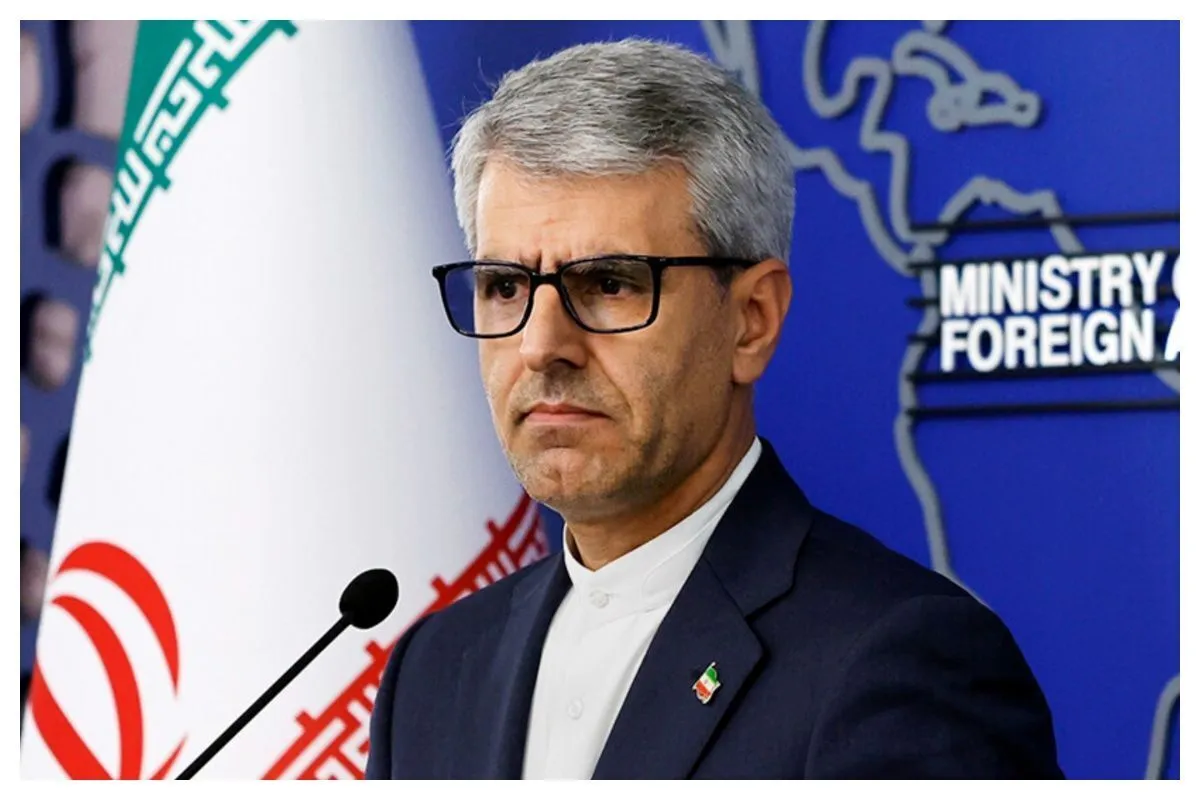
During his weekly press briefing, Foreign Ministry spokesman Esmaeil Baghaei reviewed recent diplomatic developments, noting that Iran hosted delegations from Turkey, Saudi Arabia, and South Korea over the past two days for exchanges with the Foreign Minister.
Baghaei said the international arena is witnessing rapid developments, adding that in the region, the main threat remains the Israeli regime. He pointed to ongoing crimes in Lebanon, Syria, and other regional countries, stating that despite the existence of a ceasefire, violations continue to rise sharply. He said the ceasefire in Lebanon has been violated hundreds of thousands of times and that many Lebanese civilians have been assassinated. In Gaza, he added, ceasefire violations have reached 600 cases.
Referring to the US threats, Baghaei stated that American behavior has turned it into the greatest threat to global security. He cited examples of coercive actions worldwide, including threats against Venezuela, Cuba, Nicaragua, Brazil, and Mexico in the Western Hemisphere. He described the U.S. announcement of closing another country’s airspace as unprecedented and contrary to all international norms, including aviation safety regulations. He also referred to US pressure on African countries, including claims that South Africa should not participate in the G20 summit.
Baghaei added that Washington’s full support for the Israeli regime has effectively made the US complicit in its actions. He argued that under normal circumstances, the UN Security Council should address these US actions as blatant violations of international peace and security.
Commenting on Australia’s recent accusations against the IRGC, Baghaei said Iran has officially clarified its position. He stressed that Australia’s move lacks any legal or factual basis and follows steps taken by Canberra in recent months.
He said misleading information fed to Australian authorities earlier led them to downgrade diplomatic engagement with Iran, but even Australian officials — including regional police — have clearly stated that Iran had no role in incidents involving actions against Jewish individuals.
Baghaei described Australia’s decision as nothing more than paying political tribute to the Zionist regime.
Baghaei confirmed that the Saudi Deputy Foreign Minister’s recent visit to Tehran was part of a process that began two years ago.
He said Iran-Saudi relations continue to grow, with discussions covering bilateral ties and regional issues such as Palestine, Lebanon, and Syria.
He added that both countries are committed to continuing this path to help strengthen stability in West Asia.
Regarding ceasefire violations in Lebanon, Baghaei said Israel repeatedly enters ceasefire agreements only to break them. He noted that the UNIFIL spokesperson has reported 10,000 ceasefire violations, showing that “there is practically no ceasefire.”
He argued that Israel targets not only the security and stability of neighboring countries but also their development. Such actions, Baghaei said, increase the responsibility of countries claiming to guarantee ceasefires while further discrediting those who fail to uphold their commitments.
Baghaei said Iran’s approach remains consistent: meaningful negotiations occur only when all sides acknowledge each other’s rights and legitimate concerns.
He stressed that Iran has not taken any escalatory steps; instead, the European troika’s proposed resolutions created deadlocks.
He said while dialogue with European states continues at a diplomatic level, this does not automatically indicate the resumption of formal negotiations. Recent contacts, including a phone call with EU foreign policy chief Kaja Kallas, were part of Iran’s ongoing diplomatic engagement, and this process will continue./mehr