Iran Slams Grossi over ‘Political’ Remarks beyond IAEA Mandate
| 20/December/2025 | 16:01
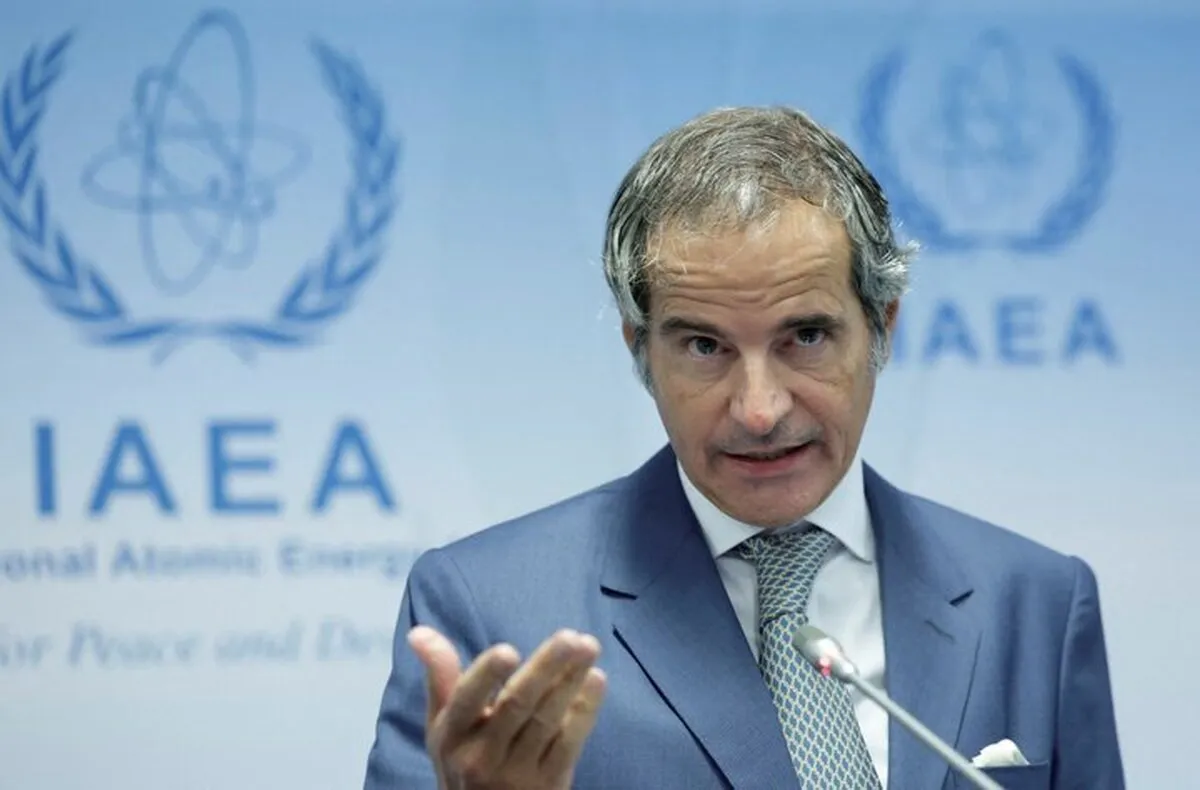
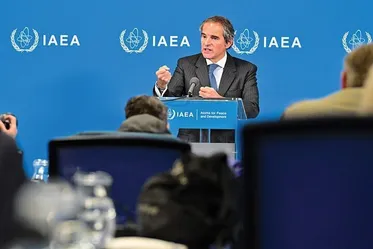
Rafael Grossi, the head of the International Atomic Energy Agency (IAEA), said in an interview with RIA Novosti that the agency seeks to visit Iran’s nuclear sites that were damaged by US strikes to ensure they are safe and to confirm inspectors’ access.
He emphasized that Iran’s nuclear program is not limited to the three facilities targeted by the US, which are significant for reprocessing, conversion, and uranium enrichment. Iran has a highly advanced nuclear program with strong research and development components and numerous other facilities across the country. The country also operates a nuclear power plant and has plans to build additional plants with Russian assistance. Nuclear activities continue across all sectors.
Grossi added that under the Nuclear Non-Proliferation Treaty (NPT) and the comprehensive safeguards agreement, Iran is obliged to provide access to these facilities. He said discussions with Tehran are ongoing because Iran argues that some sites are unsafe and inaccessible. In such cases, he said, inspectors must be allowed to confirm whether access is truly impossible.
Grossi's remarks come while the Pentagon had claimed that US military operations had completely destroyed Iran’s nuclear facilities.
Last week, Iran's nuclear chief has criticized the IAEA’s call for renewed inspections of attacked nuclear sites, insisting that the Agency lacks clear protocols to inspect sites that have been attacked by the Israeli regime and the US. Eslami said inspections had been conducted at facilities that were not attacked, but emphasized that the key issue now concerns nuclear sites that were subjected to military strikes. He stated that inspections of such facilities require a clear and defined protocol. “The Agency, which has issued no condemnation [regarding Israel and US attacks on Iran in June] and has no established guidelines, has no right to claim it intends to conduct inspections,” Eslami said.
He added that Iran has formally collaborated with the IAEA, but no official position, condemnation, or concrete action has been taken by the Agency. “Pressure exerted on us under the influence of Israel, three European countries, and the United States has no impact on Iran. It is the Agency that must answer—to Iran and to the world,” he said.
Eslami stressed that all of Iran’s nuclear facilities are fully registered with and have been under IAEA supervision. He said the current situation demands accountability from the Agency, not further questioning of Iran, calling on the IAEA to clarify its position, explain why no condemnation was issued, and specify what procedures it intends to follow.
On June 13, 2025, Israel launched a blatant and unprovoked aggression against Iran while Washington and Tehran were in a process of nuclear negotiations. The Israeli attack triggered a 12-day war that killed at least 1,064 people in the country, including military commanders, nuclear scientists, and ordinary civilians.
The United States also entered the war by bombing three Iranian nuclear sites in a grave violation of international law.
In response, the Iranian Armed Forces targeted strategic sites across the occupied territories as well as the Al-Udeid air base in Qatar, the largest American military base in West Asia.
On June 24, Iran, through its successful retaliatory operations against both the Israeli regime and the US, managed to impose a halt to the aggression./mehr