Health diplomacy helped secure medical supplies during war on Iran: FM Araghchi
| 21/December/2025 | 15:48
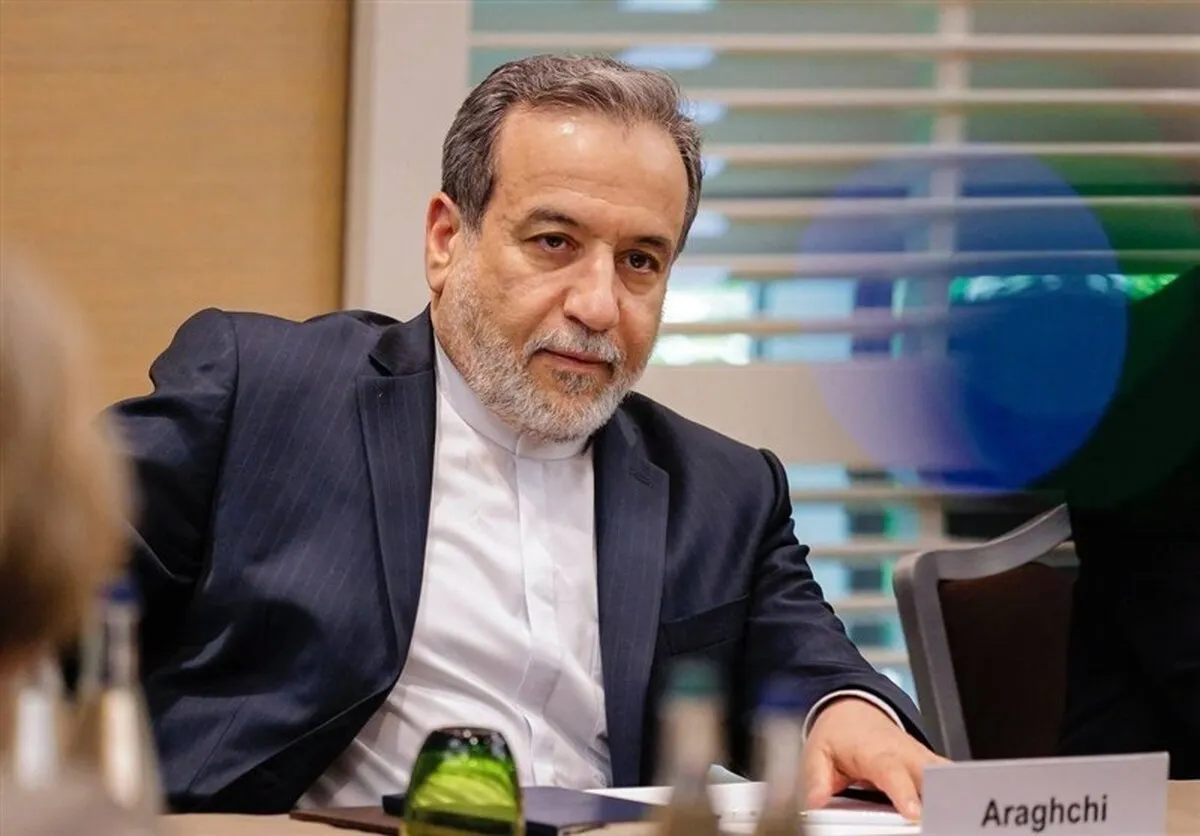
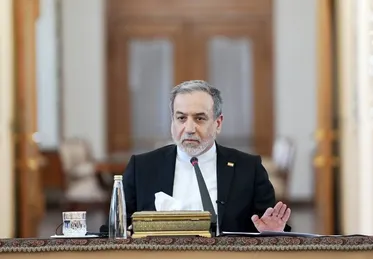
The Iranian foreign minister expounded on Tehran’s policies and on the latest international developments in an interview with Russia Today’s Worlds Apart program, hosted by Oksana Boyko.
What follows is the full text of the interview:
RT: Welcome to Worlds Apart. For many decades, Iran has been one of the harshest critics of American imperialism and impunity. It negotiated deals with the West only to see them thrown out or find itself deeply struck by American sanctions or bombs. And yet, as its officials have indicated, Iran is still open to genuine diplomacy with the Trump administration. On what terms? Well, to discuss that, I'm now joined by Abbas Araqchi, Iran's minister of foreign affairs. Minister, it's a great privilege to talk to you. Thank you very much for your time.
Araqchi: Thank you so much for having me.
RT: Now, you are now in Moscow, which has a Foreign Ministry for dealing with traditional diplomacy, and then there is a special task force for dealing with the Trump administration, particularly through its presidential envoy, Steven Witkoff. And I know that this channel is open for Iran as well. I wonder if you find it more or less effective or perhaps promising than traditional institutional diplomacy through the State Department.
Araqchi: Well, it's a fact that I am in touch with Steve Witkoff. Of course, not anymore these days because it's some months that we decided to stop. We... I negotiated with him on Iran's nuclear program and we had five rounds of negotiation and we had already fixed the sixth round for 15 June when two days before that Israelis attacked us. It was unprovoked and illegal. And then the US joined. So it was very strange that how in the middle of negotiation they decided to attack us. And that became a very, very bad experience for us. And in fact, we had another bad experience before that when the US decided to withdraw from 2015 deal known as JCPOA, again, with no reason. Or in fact, it was only one reason, that one US president didn't like the achievements of the previous administration. After this 12-day war, I continue to be in touch with Steve Witkoff. And we exchanged views, and they insisted on negotiations. But it was not. I believe it was with a very wrong approach.
RT: Can I ask you about the approach? Because I've heard you say after the June attacks on Iran's nuclear facilities that Iran doesn't respond well to threats and pressure, but it is predisposed to respect and dignity. Do you think the current US administration can still offer that?
Araqchi: It depends if they come to the conclusion that negotiation is different from dictation. We are ready for a fair and balanced deal, negotiated deal, but we are not prepared for a diktat. So if they approach us with a fair and balanced idea for a negotiated solution, which is based on mutual benefit of both sides, then we would consider. As a matter of fact, You know, we had bad experiences, even in this year of 2025, let alone previous years. We negotiated when they attacked us. Again, we engaged into negotiation in the margin of UN General Assembly, in order to find a solution for the so-called snapback. And we were very forthcoming. We introduced good ideas, but they were all rejected. And then after that, we came to the conclusion that, well, enough is enough. They are not prepared for a fair deal. So let’s wait for the time that they are coming to the point and we can talk.
RT: Speaking about the time, it's been six months since US strikes hit Iran's nuclear facilities in Natanz and Fordow, and the extent of the damage still remains the subject of debate and speculation. For example, Pentagon in its own assessment suggested that Iran's nuclear program was set back by one to two years. Does this sound credible to you?
Araqchi: Well, it's a fact that our facilities have been damaged, seriously damaged. But there is also another fact, that our technology is still there, and technology cannot be bombed. And our determination is also there. We have a very legitimate right for peaceful use of nuclear technology, including enrichment. And we want to exercise our right. This is a technology we have developed by ourselves. Our scientists have sacrificed for that. Our people have sacrificed. They have suffered from sanctions and now a very destructive war. So we cannot give our rights up. But at the same time, we are prepared to give full confidence that our program is peaceful and would remain peaceful forever. This is exactly what we did in 2015 when we agreed to build confidence about the peaceful nature of our program in return for sanctions lifting. And it worked. The US, E3, Russia, and China approached us with the language of respect. They asked for a fair deal, confidence building in return for sanction lifting, and we answered positively. And the result was wonderful. We achieved a deal. And the whole world celebrated that as an achievement of diplomacy. So they have this experience, and they have another experience, military operation. This experience has failed to achieve its objectives, but the other one was a successful experience. So we have these two options. It's up to the US to decide.
RT: Now, the International Atomic Energy Agency has been requesting access to the damaged facilities, while Iran insists that the modalities of inspection need to be revised following the Israeli and American attacks on your infrastructure. What kind of changes do you want to see in the IAEA's approach? Would the simple condemnation suffice, or do you want the agency to revise its work?
Araqchi: Well, I think it's very unfortunate that the agency and the director general of the agency failed to condemn, you know, aggression or attacking a peaceful nuclear facility under the IAEA's safeguard, and that became a very bad record in the history of IAEA. But inspecting of our attacked facilities is something else. We are still a committed member of NPT, and we are prepared to engage, to cooperate with the agency. But we have one simple question from the agency that please tell us how an attacked nuclear facility should be inspected. And there is no answer to that question. Why? Because there is no precedent. So we agreed, and the agency also agreed, that we need to negotiate to find out a modality, a framework, how to inspect those facilities. And this is the question on the table, and we need to sit down with the agency and negotiate with that.
RT: Now, you are now in Russia, and this country also ran into a somewhat similar problem with the IAEA. Because the agency refused to condemn military attacks on the Zaporizhzhia nuclear plant, apparently for geopolitical reasons. Why do you think the agency is so lenient toward what seems to be a sort of growing acceptance of nuclear terrorism? And do you think there is anything that Russia and Iran can do jointly together on that front? Because it's a common concern, I suppose.
Araqchi: Well, the agency, IAEA, is supposed to be a professional agency. But As a matter of fact, it's a political agency, or it has become a political agency under the influence of certain countries in its board of governors. And the director general is, in fact, you know, is caught between, you know, these forces who expect him to do certain things. And I think it is exactly for that reason that the agent you know, avoided to condemn attacking a nuclear facility under its safeguard. And this is the biggest violation of international law, a peaceful nuclear facility being bombed, and the whole world considered that as a big violation of international law, but still the agency refused to condemn that, like many other European countries. And this is very unfortunate. So I think the agency should come back to its professional job to avoid any politicization, to reject any demand motivated by political purposes. And I think Russia should, as a permanent member of the Security Council and a very distinguished member of the Board of Governors, should insist on that principle, something that Russia is always doing, I have to say.
RT: Iran considers uranium enrichment a matter of national dignity, pride, and scientific achievement. And while you are not ready to give up this right, you are ready to provide assurances to the Americans that the nature of this program is peaceful. What could possibly satisfy the Americans in this regard? Because as you said, you have cooperated in good faith, and nothing seemed good enough. And if I may follow up, what do you think could be the benefit for the Americans in changing their adversarial stance when it comes to your country?
Araqchi: Well, first of all, enrichment is our right before anything else. And then, of course, a matter of national dignity and national pride, because it is the achievement of our own scientists. I think by the recognition of that right, the US would do something good for the non-proliferation regime. You know, when they attacked our nuclear facilities, our peaceful, safeguarded nuclear facilities, it was first an attack to non-proliferation regime. And it undermined that regime, which is very important for the peace and stability of the whole world. So NPT, Non-Proliferation Treaty, is a very important security treaty respected by all countries around the world. And based on that treaty, countries who are committed to their obligations based on NPT can enjoy their right for peaceful use of nuclear technology. And when you deny that right from a specific country, in fact, you are undermining, you are weakening NPT as a whole. So I think the best thing that the US can do for the world, not for our region, not for Iran, is to respect NPT and respect the rights of countries who want to enjoy their rights based on NPT.
RT: Minister, just before the break, we started talking about the American and Israeli attacks on your nuclear facilities. And since then, US has continued to increase its military presence in the region, particularly naval presence. Given what's going on there, especially Israeli military expansionism, do you think at this point of time this growing American presence in the region is a stabilizing or destabilizing force as far as you're concerned?
Araqchi: It's obvious. It is destabilizing the region and increase the tension. It is actually an escalation. You know, you see in the past two years, Israelis have attacked seven countries in the region and continue to threat, and they are continuing to violate the ceasefire they have signed, both in Gaza and Lebanon. And the US is the guarantor and do not care about these violations. So these are concerning facts which increase the level of tension in the region, which increase the level of disconfidence to the US, and in fact make the region less safe and secure.
RT: Is there concern in your country of another US strike or perhaps a larger-scale military operation against your country?
Araqchi: Well, obviously we don't reject that possibility, but we are fully prepared for that, even more prepared than the previous time. This doesn't mean that we welcome another war, but it is exactly to prevent a war. And the best way to prevent a war is to be prepared for that. And we are fully prepared. And we have actually recovered everything which was damaged in the past aggression. And we are prepared for that. If they want to repeat the same failed experience, they are free to do that, but they don't get any better result.
RT: Let me ask you specifically about Israel, because you mentioned that this past year it attacked seven neighboring nations. Do you expect them, I mean Israel, to continue in the same vein in 2026, or do you think the peak has already passed?
Araqchi: Well, it has not stopped. So I guess they continue their aggressive behavior, and there is only one reason that they continue to do that, and I expect they will continue in 2026. And the reason is the full impunity which is given to them by the US and Europeans. And this is very dangerous. That changes you know, the order, not only in our region, but in the whole world, to this order. So apparently we are back to the law of jungle. That the party who has more power and force can impose its will on the others. And this is undermining the whole international law and the whole international humanitarian law, and it is very dangerous.
RT: I think it may be even worse than the law of jungle because the crisis in Gaza is now widely referred to as genocide, and it severely damaged Israel's standing around the world, to some extent vindicating Iran's own longstanding criticism of the Israeli actions. And yet it also revealed the international community's full incapacity or unwillingness to do anything about it. At this point of time, what prospects do you see for the Palestinian issue?
Araqchi: Well, I think this is up to Palestinians to decide, and I think they have already...
RT: It's hard to decide when you are being...
Araqchi: Yes, of course, but I think they have already chosen the way of resistance, because, you know, what else they can do? Even when they talk about a Palestinian state, you know, a big number of countries have recognized, and the number is increasing, but tell Palestinians where is their state. It's only on the paper. And the killing continues. Even after the ceasefire, the recent ceasefire, till today there has been more than 350 Palestinians being killed by Israeli forces. So as long as there is no justice for Palestinians and there is no hope for them, for the future, for their self-determination right, there would be no peace. And as long as Palestinians are denied justice, I don't think we can come to a durable peace. Maybe it can be established for a short period of time. Look at the past eight years. There have been how many? More than 150 different initiatives and plans to resolve this conflict between Palestinians and Israeli aggressors. None of them worked. Why? Because all of them lacked the element of justice.
RT: Minister, as far as Iran is concerned, do you still see the so-called two-state solution as a viable option? And is there anything that Iran, Russia, other international players can do to facilitate more humane circumstances for the Palestinian people?
Araqchi: Well, we always believe that two-state solution is not a solution for this problem in our region. And the only way is to go for a one democratic state. And this has been our position, Iran's position, since, you know, eight years ago, when in 1948 they voted for two states in Palestine, an Arab state and a Jewish state, Iran voted against that time. And Iran's representative, Iran's envoy to the General Assembly meeting said that by doing this you are only putting the fire under the ashes and it would be again erupt. And he was right. So we believe that a two-state solution doesn't work for many different reasons that there is no time for me to explain, but we believe that one democratic state can work. And I can refer you to the experience of South Africa. When the apartheid regime collapsed, nobody went for two states of blacks and whites. They went for one democratic state in which blacks and whites are living in peace together. When they talk about two-state solution, so my question is still valid. Where is the Palestinian state? Only on paper. And there is no prospect that this state can be one day materialized on the ground.
RT: I also want to ask you about the bilateral relationship between Russia and Iran, because two nations face similar economic and geopolitical pressures from the West. They cooperated on matters of regional security, but they also – each of them built their own development on the principles of sovereignty and self-sufficiency. To what extent do you think Western antagonism has stimulated this partnership? And are you satisfied with the way bilateral track is developing?
Araqchi: Well, we are quite satisfied. We enjoy a very good relation and we already signed a strategic partnership agreement with each other. It was just last year or the beginning of this year, I suppose. And based on that, we have moved very positively. We are working with each other. We are consulting with each other in all different areas. And I have to say that our relation with Russia is comprehensive and multidimensional. It covers everything. We have very good political consultations with each other on almost each and every issue, from Iran's nuclear program, peaceful nuclear program, to developments in our region, to developments in Europe and Ukraine, on international issues, on bilateral issues. There is a constant, regular consultation between us. The last time the two presidents met was just a few days ago on Friday in Ashgabat in Turkmenistan, when the two presidents met and reviewed our bilateral relations and also touched the questions of importance for both sides. And our relation also covers working with each other on international organizations.
RT: Can I ask you about another aspect of bilateral relations? And that is your relationship with Saudi Arabia, because two years have passed since the diplomatic ties have been restored through the act of mediation of China. How do you assess the dynamics of this process and do you think it could be aided by the actions of Israel, let me put it diplomatically?
Araqchi: Well, I have to say that we enjoy a very good relation with Saudi Arabia. In the past two years that we resumed our relation thanks to Chinese efforts, I can say that both of us have found the other side serious. We have been able to build more confidence in our bilateral relations. We are now consulting with each other on regional issues, on the Palestinian issue, even nuclear issue, everything. The exchange of delegations between us is quite good. In the past 30 days, I think, we had two deputy foreign ministers of Saudi Arabia visiting Tehran for two different purposes. And one of them was for our trilateral meeting with China. So we are working very well with each other. There is more confidence between us now. And it is not only with Saudis, but also with other countries in the Persian Gulf region and in the Middle East at large. And I have to say something that although Netanyahu has done many crimes, he has done all negative things, but he has also done one positive thing. And that was to show to all countries of the region and people in the region that there is only one threat, and that is Israel, and not Iran, not anybody else. The only and the main threat to the security and stability of the region for each and every country in the region is Israel, especially after they talked about the greater Israel, which made every country in the region concerned, especially when they attacked Qatar, as a friend and ally to the US. So they made clear that they make no difference between countries of the region. So now they are the biggest challenge and the biggest threat in the region, considered as a threat by each and every country in the region. And that has made our bilateral relations even much better, because now we have more trust and confidence to each other.
RT: And as we are nearing the end of our conversation, let me ask you a somewhat personal and academic question, because I know that 30 years ago you got your PhD in political thought with a thesis dedicated to studying the evolution of political participation in the 20th century political Islamic thought. I wonder what do you see as a practitioner of foreign policy, what do you see as the major trends in politics, in democratic choice, in Islamic countries for this century? I know it's a question for another thesis, but if you could condense it to one.
Araqchi: I need to pay a lecture on that. But I believe that countries, Islamic countries, have now become more and more interested in democratic institutions. And the level of political participation by the people have increased. Of course, it differs from one country to another. But I think the general tendency in the Islamic world is now moving towards more democratization and more democratic institutions. And I think that is a good phenomenon which is now happening. And we have seen it in our own country. We have now an Islamic Republic after the revolution, which tries to make a coexistence between Islamic principles and democratic institutions. And I think the same experience is going around the region. Of course, every country has its own principles, has its own values, and has its own traditions. I believe that democracy is something which should be generated from within and not being imposed from outside. Why it has failed in many other places? Because Westerners try to impose their own democracies to other countries. And that is not a good idea, of course. Democracy should be something generated from inside, taking into consideration the values and traditions and history and beliefs of any specific nation for that.
RT: Well, Minister, you've been very gracious with your time. Thank you very much for this interview.
Araqchi: My pleasure./tasnim