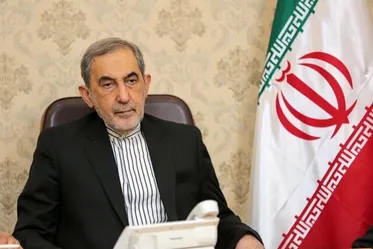
Iran's powerful diplomacy focuses on securing regional stability: Velayati
| 26/December/2025 | 20:42
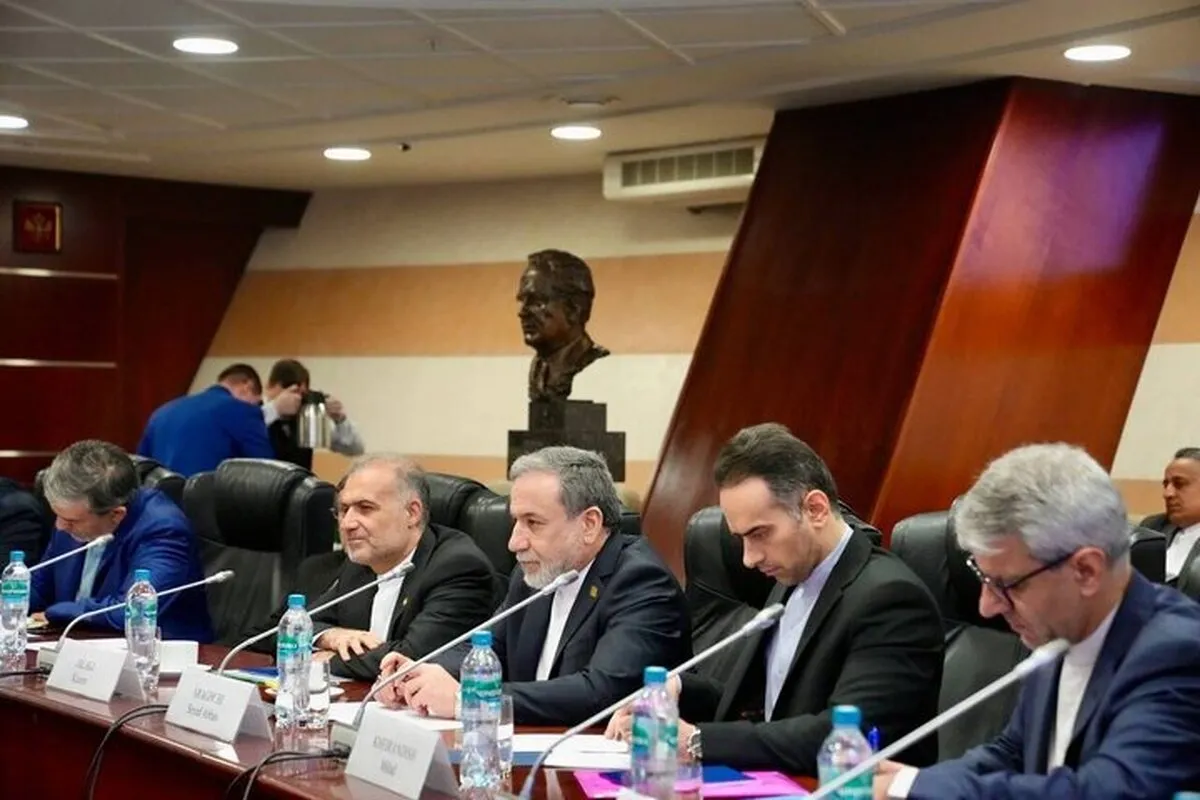
Araghchi made the statements while addressing a host of students and academics at Russia’s MGIMO University last week. His remarks have been released today by the Foreign Ministry, Press TV reported.
In his address, the minister stressed that the international system is “unfortunately moving toward disorder”.
“After the establishment of the United Nations, countries tried to create an order based on international law and regulations, but what we are witnessing today, especially in the new policies of the US government, is a disregard for laws and a replacement with force and power,” Araghchi said.
Iran’s top diplomat added that US President Donald Trump’s foreign policy is based on “peace through force”, while humanity has been trying for years to achieve peace through diplomacy and law.
“Peace through force means that whoever has greater power imposes their will on others; this is ‘the law of jungle’,” he explained.
The Iranian minister further said that Washington is not only “intervening anywhere in the world, carrying out attacks, conducting assassinations and imposing sanctions”, but also giving its ally in West Asia, Israel, a green light to “act freely in violation of all international laws.”
“In recent years, Israel has attacked several regional countries, and tens of thousands of Palestinians in Gaza have been killed, with genocide ongoing, but, unfortunately, the US and some European countries have remained silent,” he said.
Araghchi also referred to the June attacks on Iran’s peaceful nuclear facilities, which are under the supervision of the International Atomic Energy Agency, as “one of the biggest violations of international law.”
“These are examples of the lawlessness in the international system that is pushing the world towards greater insecurity.”
Unlike the past, Araghchi said, the US is now explicitly acknowledging the use of force. He pointed out that “While we were negotiating, we were attacked, and then we were asked to engage in negotiations based on surrender. Even the President of the United States explicitly called for [Iran’s] 'unconditional surrender.'"
However, he stressed that Iran’s resistance and response to the aggression managed to force Washington and Israel to “shift from demanding surrender to seeking an unconditional ceasefire.”
“We decided to resist and utilized our capabilities, including our defensive and missile capabilities. Our armed forces gave a decisive response. While it is said that the sky over Iran was within the enemy’s reach, it is not mentioned that the sky over the occupied territories was also within the range of Iranian missiles.”
“This experience shows that in the current international system, countries have no choice but to be powerful,” Araghchi emphasized.
Supported by the United States, Israel conducted an aggression on Iran on June 13, a few days before the sixth round of indirect nuclear talks between Tehran and Washington.
More than a week later, the United States also entered the war by bombing three Iranian nuclear sites in a grave violation of the United Nations Charter, international law, and the Non-Proliferation Treaty (NPT).
On June 24, Iran, through its successful retaliatory operations against both the Israeli regime and the US, managed to impose a halt to the illegal assault./mehr